Architecture Is Entering a New Digital Era
The architecture, engineering and construction industries are undergoing a major technological transformation.
Buildings are no longer designed and documented exclusively through traditional two-dimensional drawings.
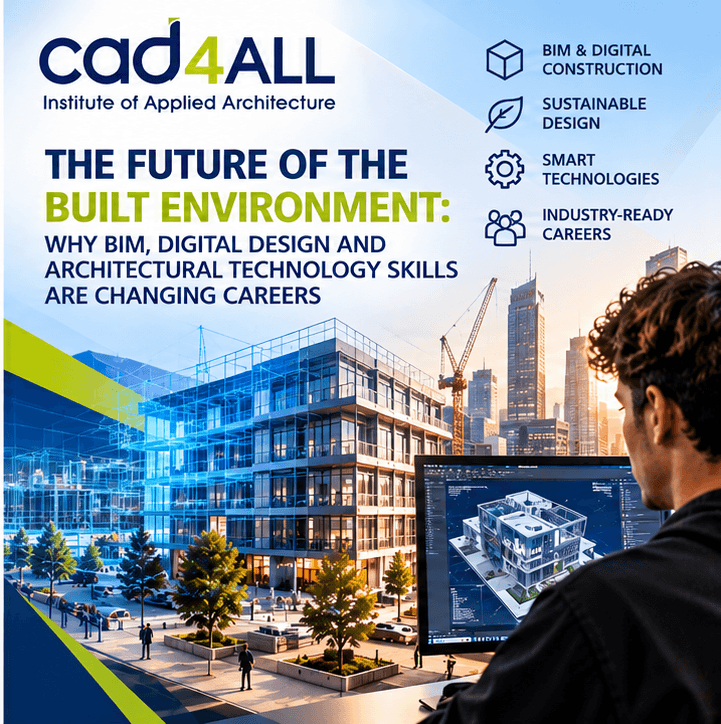
Today, digital building models, intelligent design systems and collaborative construction technologies are influencing how projects are planned, developed and managed.
For students considering a career in architecture or the built environment, this transformation creates exciting opportunities.
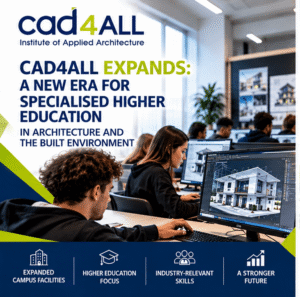
At CAD4ALL Institute of Applied Architecture, the relationship between architectural education and digital technology is central to the institution’s specialised educational direction.
Understanding these emerging technologies can help future professionals prepare for changing workplace expectations.
What Is Building Information Modelling?
Building Information Modelling, commonly known as BIM, is a collaborative process for creating and managing digital information about buildings and construction projects.
Unlike a conventional drawing that primarily represents geometry, a BIM model can contain information about building elements, materials, dimensions and other project characteristics.
BIM processes can help project teams coordinate design information and manage changes more effectively.
Applications such as Autodesk Revit are widely associated with BIM workflows.
However, BIM is more than a software package. It involves information management, collaboration, project processes and technical standards.
Why BIM Skills Are Becoming Important
Modern construction projects often involve architects, architectural technologists, structural engineers, mechanical engineers, electrical specialists and project managers.
Each discipline contributes information that must be coordinated throughout the project.
Digital building models can support this process by helping project teams identify potential design conflicts, communicate technical information and maintain more consistent documentation.
For example, a coordinated building model can help identify where mechanical services may interfere with structural components before construction begins.
Although BIM cannot eliminate every design or construction problem, effective implementation can improve collaboration and support better-informed project decisions.
This makes BIM knowledge relevant to a growing range of technical and professional roles.
AutoCAD, Revit and the Digital Design Skills Employers Value
Different design applications support different stages and types of work.
AutoCAD — Technical Drawing and Documentation
AutoCAD remains a significant tool in computer-aided drafting.
It supports the creation and editing of technical drawings used across architectural, engineering and construction-related disciplines.
Students learning AutoCAD can develop foundational digital drafting skills, drawing accuracy and technical communication capabilities.
Autodesk Revit — Intelligent Building Modelling
Revit supports BIM-based building modelling and documentation.
Students can use the software to understand how building components relate to one another and how changes to a digital model affect associated views and documentation.
Revit skills are particularly relevant to architectural modelling, technical documentation and multidisciplinary coordination.
Fusion 360 and Other 3D Design Technologies
Three-dimensional design technologies can also support modelling, prototyping, fabrication and related technical processes.
Although different applications serve different industries, understanding digital modelling principles can strengthen a student’s broader technical capabilities.
The Growing Importance of Architectural Technologists
Architectural technologists contribute technical expertise to the development and documentation of building projects.
Their work may involve building technology, construction detailing, technical design information and digital documentation.
As digital workflows develop, architectural technology education increasingly benefits from incorporating computer-aided design, three-dimensional modelling and BIM concepts.
However, technical software proficiency and professional registration are separate matters.
Students should understand the academic, experience and professional registration requirements applicable to their intended careers.
Digital Skills Beyond Architecture
BIM and digital design are not limited to architectural practices.
Related competencies may be useful in construction management, engineering coordination, building services, technical consulting and other areas of the built environment.
Potential areas of work include:
- BIM modelling and coordination support
- Architectural CAD documentation
- Digital construction documentation
- Building services modelling
- Technical design coordination
- Construction information management
- 3D visualisation and presentation
- Digital design and technical consulting
The precise responsibilities and entry requirements for each role depend on the employer, qualification and relevant professional regulations.
Why Academic Qualifications and International Certifications Complement Each Other
A formal academic qualification and an international software certification serve different purposes.
An accredited academic qualification is designed to develop knowledge and competencies against an approved curriculum and qualification framework.
A software certification generally provides evidence of proficiency in a particular technology or application.
When combined appropriately, these forms of learning can strengthen a student’s educational profile.
For example, an architectural technology student may benefit from formal studies in building design and construction technology while developing additional proficiency in AutoCAD or Revit.
CAD4ALL supports opportunities for industry-relevant software training and international certification as part of its broader digital education approach.
How CAD4ALL Is Preparing for the Future
Since its establishment in 2008, CAD4ALL has maintained a strong connection with technical design education.
Its ongoing development into a specialist higher education institution reflects a commitment to advancing architecture and built environment learning.
The institution’s Diploma in Integrated Architectural Technology, its focus on digital design competencies and its investment in expanded campus infrastructure form part of this direction.
By bringing together academic learning, practical technology and industry-focused skills development, CAD4ALL aims to prepare students for an increasingly digital built environment.
The expansion of its facilities in Tygervalley creates further opportunities to support specialised learning environments and future academic development.
The Future Belongs to Adaptable Professionals
Technology will continue to influence how buildings are designed, documented, constructed and maintained.
Artificial intelligence, digital collaboration, automation and information-rich building models are likely to create further changes in the industry.
For future built environment professionals, technical knowledge, adaptability and continuous learning will remain important.
Students who develop a strong academic foundation alongside relevant digital skills can position themselves to respond to these developments.
Build Your Future with CAD4ALL
Whether your interests lie in architectural draughting, architectural technology, BIM or digital construction, selecting the right educational pathway is the first step.
CAD4ALL Institute of Applied Architecture & Digital Arts provides specialised educational opportunities for students seeking to develop their knowledge and technical skills.
Explore the future of architecture and the built environment.
Visit the CAD4ALL campus at 281 Durban Road, Golden Isle Building, Tygervalley, Cape Town, or arrange an academic consultation to discover the available qualifications and training opportunities.